
What Makes You Want to Protest?

Joe Dorman • May 28, 2024

Over the course of human history, people have had the tendency to revolt against authoritarianism. Whether you are reading certain scriptures in the Bible, studying history in school, or even catching up with the news, demanding change in policies with the government has been a constant.


In trying to change policy directly with government officials, that action is called lobbying. Most people think of individuals who are hired by a client to encourage policymakers to take a specific direction through making a law. These professional lobbyists register with the government and represent clients who want a policy change. They bring a knowledge of the issue and why the lawmaker should vote for the concept. These individuals often engage in the elections of candidates who will support the mission of their clients.


Citizen lobbyists can be individuals who visit the Capitol to promote an issue which would solve a problem. We often see associations such as health programs visit on specifically organized days at the Capitol to raise awareness. There is no registration for these individuals as they are not being paid to represent the interest.


You can also see other types of people engage in changing policy. Activists are the folks you see on television carrying protest signs at rallies or, of late, forming encampments to promote a policy direction. While these individuals are not effective at directly instigating change in a political stance, they hope their work will raise awareness and build support for that change.


Advocacy is another form of promoting change in government, and advocates often are methodical with how to promote their work. They do their best to educate policymakers about problems and offer solutions. They spend time and effort to collect data and break it down into understandable language in the hope this will bring about policy changes for the mission they are undertaking.


Through my thirty-plus years in and around government, I have seen each of these types of promotion be successful. We had a teachers’ rally at the State Capitol eight years ago that saw thousands of Oklahomans spend days promoting different positions. With that effort, you had activists who marched, advocates who sat with policymakers to share data, and lobbyists who worked to get certain lawmakers to vote for the changes desired. Ultimately, most did not get all that they wanted, but many did see desired changes occur.


As we close the Second Session of the Fifty-Ninth Oklahoma Legislature on May 31, I can say it was not nearly as fiery as previous years, but there were some interesting moments. Last week, Gov. Kevin Stitt, Senate President Pro Tempore Greg Treat, and House Speaker Charles McCall reached an agreement on the 2025 Fiscal Year Budget. It will be voted on this week in the Legislature and sent to the governor for signature.


In this final week, I have hope there will be a scramble to pass legislation which has been lingering and awaiting a compromise on the budget. Still at hand are bills which would end corporal punishment for some special needs students in public schools, a tax policy which would incentivize businesses to provide or assist with childcare for their employees, and dozens of other good concepts.


If these bills are not heard, there is always next year. It is sad that this attitude is recurring, but that is how the slow process of change in government happens. If there is something you desire to see changed, in government, it is time for you to reach out to your own lawmakers and ask for those policies to be adopted. Become the lobbyists, activist or advocate that is needed to see Oklahoma become a better home for children.
By Joe Dorman September 21, 2026
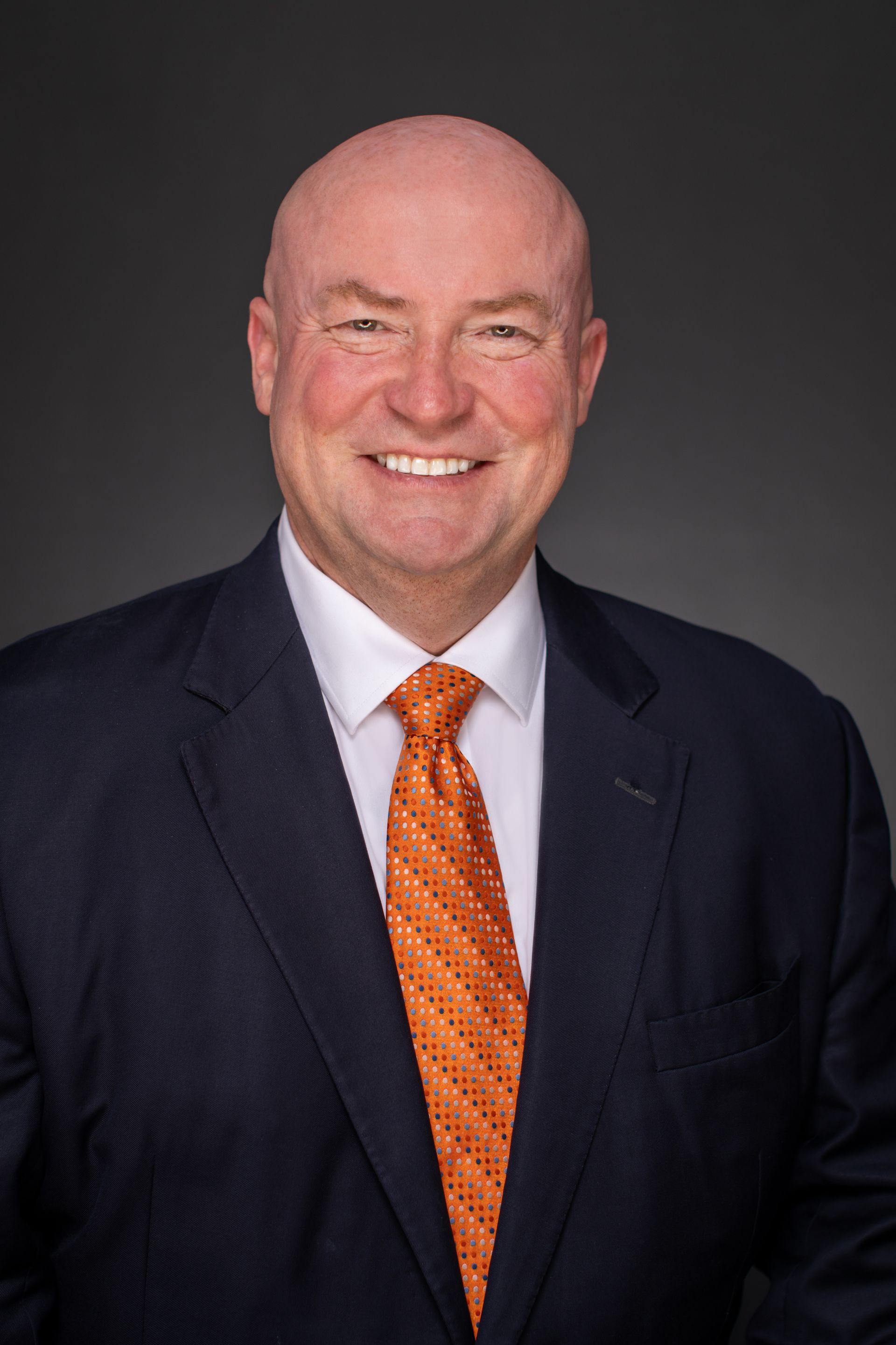
U.S. Rep. Tom Cole, R-Oklahoma (right) visits with Joe Dorman, CEO of the Oklahoma Institute for Child Advocacy in the congressman’s Washington office. Dorman made the trip to the Nation’s Capital Sept. 14-16 as part of a group of advocates to visit with Oklahoma’s congressional delegation about ways to combat hunger in the state. (Courtesy Photo) Joe Dorman, CEO of the Oklahoma Institute for Child Advocacy, visits with U.S. Rep. Frank Lucas, R-Oklahoma, (left) in the congressman’s Washington office during a trip to D.C. Dorman was in the nation’s capital with a group of Oklahoma advocates to discuss hunger issues with federal lawmakers. The trip occurred Sept. 14-16, 2026. (Courtesy Photo) U.S. Sen. James Lankford, R-Oklahoma, (center) poses with a delegation of advocates from Oklahoma concerned about hunger in the state during a meeting in the Nation’s Capital. Among the group in D.C. during the week of September 17 was Joe Dorman, CEO of the Oklahoma Institute for Child Advocacy (Far Right). (Courtesy Photo) Last week, I traveled to Washington, D.C., to meet with members of our federal delegation regarding issues created by federal mandates placed upon states to reduce error rates in the social safety net. This “anti-hunger” gathering was organized by Hunger Free Oklahoma and included the Regional Food Bank of Oklahoma, the Eastern Oklahoma Food Bank, local providers of food support, and the Oklahoma Institute for Child Advocacy (OICA). The “One Big Beautiful Bill” requires states to reduce paperwork errors to ensure Oklahomans fully qualify. This created backlogs in people calling help lines, confusion about what paperwork is needed, and growing frustration causing many individuals to simply give up on services. Our trip showed the seriousness of the situation faced by hundreds of thousands of Oklahomans. I appreciate the members of the delegation who personally met with us and the dialogue we had with their staff members. I am also thankful that Oklahoma Human Services (DHS), our state agency overseeing this, takes this seriously. DHS is working with OICA to help share information to assist Oklahomans on how to navigate the challenges created by the federal law and regain support. Latest numbers show 943,377 Oklahomans are 60 or older, or about 23 percent of the state's population. By 2034, that population is projected to grow another 21.3 percent, and for the first time, adults 65 and older will outnumber children in the state. Many older Oklahomans are called upon to care for younger generations, such as grandparents raising grandchildren. In Oklahoma, 109,221 children live in homes where a relative is the head of household, and 61,000 are being raised by kin with no parent present. More than 43,000 grandparents are the head of households and responsible for grandchildren living with them. For every child raised by kin inside the foster care system, 22 more are raised by kin outside of foster care, meaning most of this caregiving happens without any state involvement or support. Oklahoma Human Services' Community Living, Aging, and Protective Services division has identified four significant challenges facing older Oklahomans: financial security, appropriate housing, the state's capacity to meet increasing service needs, and simply knowing how to find available help. Much support happens through a network of local partners, including 11 Area Agencies on Aging across Oklahoma. For help, call the Statewide Aging and Disability Info-Line at 1-800-211-2116. Calls are routed to the appropriate local resource based on the caller’s needs. The ADvantage Waiver is a critical part of support. This program helps eligible older adults and adults with disabilities receive long-term services and support at home rather than entering a nursing facility. Services can include personal care, case management, skilled nursing, home delivered meals, respite, home modifications, specialized medical equipment, and adult day health. To qualify, individuals must meet financial requirements, the program's medical level of care requirements, and age or disability requirements. Eligibility is individualized. An online application is available through DHS. Anyone unable to complete it online can call 1-800-435-4711 to arrange a telephone application or visit a local DHS office. After applying, applicants may need to verify citizenship or immigration status, income, other financial resources, and Social Security number. They will also select qualified providers in their area and complete a medical eligibility assessment. Agency instructions tell applicants to respond within 10 calendar days of the postmark in any follow up letter, or the application cannot continue. Medicare can be difficult to navigate, especially when comparing Medicare Advantage plans, prescription coverage, supplements, or programs designed to lower health care costs. The Oklahoma Insurance Department’s Medicare Assistance Program, known as SHIP, provides free, objective counseling from trained counselors: 800-763-2828. 2-1-1 and Be A Neighbor are avenues to seek help. By calling 2-1-1, navigators can assist with a variety of resources. Be A Neighbor is a statewide online resource directory where people can enter their ZIP code and search for assistance. I will continue sharing information in coming weeks to assist in navigating these issues.
By Joe Dorman September 15, 2026
The Oklahoma Institute for Child Advocacy (OICA) is continuing to work with Oklahoma Human Services (DHS) to shed light on how to help those in our state who qualify for services to be able to retain them or apply due to economic situations. I have been helping my mother navigate renewing her services with the additional requirements established by the federal law passed last year. I want to thank our local funeral home for assisting us with assigning her life insurance policy over to a funeral plan. They told us three people had come in the same day we visited to do the same with paperwork. I also appreciate our local Realtor® for drafting a letter accurately listing the value of a piece of property which she and I jointly own. It will take some time to ensure that all paperwork is sufficient to restore services, and if you know of someone who is struggling, please help them to either file forms online or visit one of the local DHS offices. More information will come next week on how to best navigate the process, and I appreciate DHS leadership for working with OICA to help get this information out. This week, I will be in Washington, DC, visiting with members of our congressional delegation about this process. Far too many Oklahomans, an estimated one quarter of our population, or one million people, receive support from these government programs. While I agree that there is a need to ensure verification, it should not come with increased difficulty for those who are elderly, infirm, or children who legitimately receive a benefit. Most receive these benefits temporarily, but for those senior citizens who have retired or are unable to work, they are owed this benefit for their years of hard work in jobs which did not provide sufficient, if any, retirement benefits. I mention this age category, knowing that I primarily advocate for youth, because Oklahoma consistently ranks as one of the top states in the nation for grandparents raising their grandchildren or taking on family placement cases through Human Services. I am looking forward to the visits this week so those of us present can share the stories we have heard so often over the past few months from those who reach out to us or the many we serve as nonprofit organizations. I would encourage you to reach out to policymakers to share your own story, as that is why advocacy is so important. If our elected officials do not hear how laws impact citizens, it is unlikely things will change. I will share more on the OICA social media accounts as we navigate the halls of Congress. This week will also celebrate Constitution Day across our nation. September 17 is designated as the day on which we recognize this document, created by our founding fathers, and amended by the people through the years to guarantee life, liberty, and the pursuit of happiness. OICA has the great pleasure of supporting this education through our Kid Governor® program. Fifth grade students have the chance to learn through free prepared lesson plans provided to teachers to help them present how the process of state government works, why it is important to vote when children turn 18, and it also provides an enhanced option where the students themselves go through a classroom election, present ideas for bettering our state, and the youth vote to see who will win. Thank you to classrooms in Allen, Ardmore, Bethany, Colcord, Collinsville, Commerce, Cushing, Del City, Duncan, Durant, Enid, Erick, Forgan, Lawton, Marble City, Marlow, Marietta, Moore, Mustang, Oklahoma City, Pond Creek, Putnam City, Roland, Tulsa, Tupelo, Wanette, and Wayne for signing up. If you do not see your school on here and you have a fifth grader, please reach out to your child’s teacher with the information from https://ok.kidgovernor.org/ or reach out to our program director, Licia Walters-Davis, at lwalters@oica.org for information on how to sign up by Friday at 5 p.m.
By Joe Dorman September 8, 2026
Over the past several weeks, many Oklahomans have contacted the Oklahoma Institute for Child Advocacy (OICA) regarding suspension or reduction of some benefits of the social safety net. Long wait times on help lines, confusion regarding needed forms for verification, and lack of access to internet have impacted Oklahomans, including families with young children. Oklahoma has quite often fallen into the “Top 10” of states with grandparents raising their grandchildren, placing an even greater strain on families. We at OICA support efforts to streamline eligibility verification and ensure fraud does not occur. While a dozen people in Oklahoma were arrested recently for SNAP fraud, there are tens of thousands of Oklahomans who qualify, but simply have trouble understanding the requirements. They should not be penalized by an overly burdensome system. The social safety net is heavily subsidized by the federal government. The “One Big Beautiful Bill Act,” federal legislation signed by President Trump in July 2025, requires states to pay a share of SNAP benefit costs. The law requires states with SNAP payment error rates greater than 6% to pay a share of benefit costs, with the amount depending on how high a state’s error rate is. Nationally, advocates are reaching out to members of Congress asking for time for states to adjust their processes. Such a waiver would give states’ SNAP programs time to reduce payment error rates and avoid cuts to needy families. State agencies oversee several programs, including SNAP, childcare services, Advantage support, WIC, Medicaid, and several other social safety net programs. Each face federal cuts for matching funds. After I expressed concerns during an interview on an OKC news station, senior leadership at Oklahoma Human Services (DHS) reached out to me. I was assured the state will unveil a plan soon to shorten long waits and provide greater assistance, and that improved communications to make sure Oklahomans who qualify for services are receiving services. Until these adjustments are made, DHS asked me to share with readers of my column how to best prepare before reaching out on the call line or in person at one of the remaining DHS offices still open around the state. Important information you will need includes information on changed jobs or hours, whether monthly housing costs have changed, whether the number of people living in your household has changed, or whether you moved recently. For your verification checklist, have identification, proof of what you earn, proof of other income, shelter, and utility expenses, as well as medical cost records for those 60+ or disabled. Here are three points which I was asked to share: Submit – Make sure all required documentation is on hand before applying for SNAP. Save – Save the number 405-522-5050 in your phone to prepare for an interview call to verify the ability to receive support. Standby – No need to call to check the status of your case; the best way to do this is by logging onto your account at OKDHSLive.org and if you need help with this, see if someone close to you can assist. It is important to not save personal information on a public computer, such as at a library. Purchase a flash drive to store your documents and do not leave it behind following computer use. I appreciate DHS leadership for sharing this information and look forward to working with state and federal lawmakers to help resolve these issues. Over the next few columns, I will highlight important information needed for each of the programs impacted by the federal mandates on states. Next week, I will meet with members of our federal delegation in Washington, D.C., to discuss this directly and appeal for help in allowing Oklahomans who qualify for support to receive this aid. Every Oklahoman should feel free to contact your U.S. senators and members of Congress to share your stories. 
By Joe Dorman August 31, 2026
I am a numbers guy, so I enjoy analyzing elections. Oklahoma’s Primary Elections were held on June 15 to select party nominees for the General Election, to be held November 2. Runoffs races for candidates not receiving a majority in the Primary were held on August 24 between the top two vote-getters. The ballot also included two state constitutional amendments. Overall Primary Runoff turnout was 22% of registered Oklahoma voters, which includes the three parties (Democrat, Libertarian and Republican) and independents. Independents and Libertarians could vote only on the two state questions, with the two major parties having more to decide. Democrats had a 21% turnout for one statewide primary, a U.S. Senate race between the eventual winner N'Kiyla Jasmine Thomas and Jim Priest. About 616,000 Oklahomans are registered Democrats, according to the state Election Board, and 129,439 Dems voted in the runoff. Thomas faces Republican Kevin Hern, Libertarian Sevier White, and independents Ron Meinhardt and Curtis Stinnett in November. More than 371,000 Republicans voted, or 28.7% of registered party members. Mike Mazzei narrowly edged out Gentner Drummond in the gubernatorial runoff, winning by a total of just over one vote per our state’s 1,984 precincts. Three other statewide Republican Runoffs were also held for offices. For the governor General Election, it will be Mazzei, Democratic nominee Cyndi Munson, and three independents – Robert Brooks, Orlando Lynn Bush, and Jerry Griffin – on the ballot. So, what explains the turnout this year? In all four of their races, the Republicans ran significant ad time on television and online. Democrats did not utilize these traditional methods, so this likely led to their lower percentage. In the Primary Election held earlier this year, 26% of registered Oklahoma voters went to the polls, so, there was just a 4% dropoff. When you look at previous years, exempting out the 2018 vote which included the medical marijuana referendum, most other years had significant dropoffs from Primary to Runoff, like what our neighbors in Texas had earlier this year. Comparing Oklahoma and Texas, in the TX Primary, 24% showed up in their Primary and then 9% in the run-off. Their ballot decided the Republican nominee for the U.S. Senate race between two heavily funded, well-advertised candidates. Oklahoma certainly won that turnout competition. While I am not thrilled with the low voter percentage, I am thankful for those who did take the time to vote. This matters greatly for the decision of who will represent us in elective offices. How do we fix this? The Oklahoma Institute for Child Advocacy (OICA) is doing our part to encourage young Oklahomans to understand the importance of voting. Through our Oklahoma Kid Governor® program, fifth-grade classes in public, private, and charter schools can receive free lesson plans for teachers to help lead instruction on the role of officials and why each of us has a civic responsibility to vote when we turn 18 years old. Teachers can also do an optional addition where students in the classroom can run for Kid Governor® on a platform of their choosing. The class votes and the winner then submits a video to our office explaining why their issue is important. We narrow down the field to seven candidates, then ballots and candidate videos are sent to each participating classroom for the students to watch and vote for their favorite. We have not held this program long enough to assess if voter registration and turnout will increase in each of those communities, but in watching the excitement these children have to be able to do something as important as voting, we at OICA expect it will boost turnout, long term. We have a few weeks left for 5th grade classrooms to sign up. Please share with those teachers in your community so we can begin the process of preparing these young people for one of our most important civic obligations. Email OICA Program Director Licia Walters-Davis at lwalters@oica.org to learn more about how your local classroom can participate. 
By Jay Paul Gumm August 31, 2026
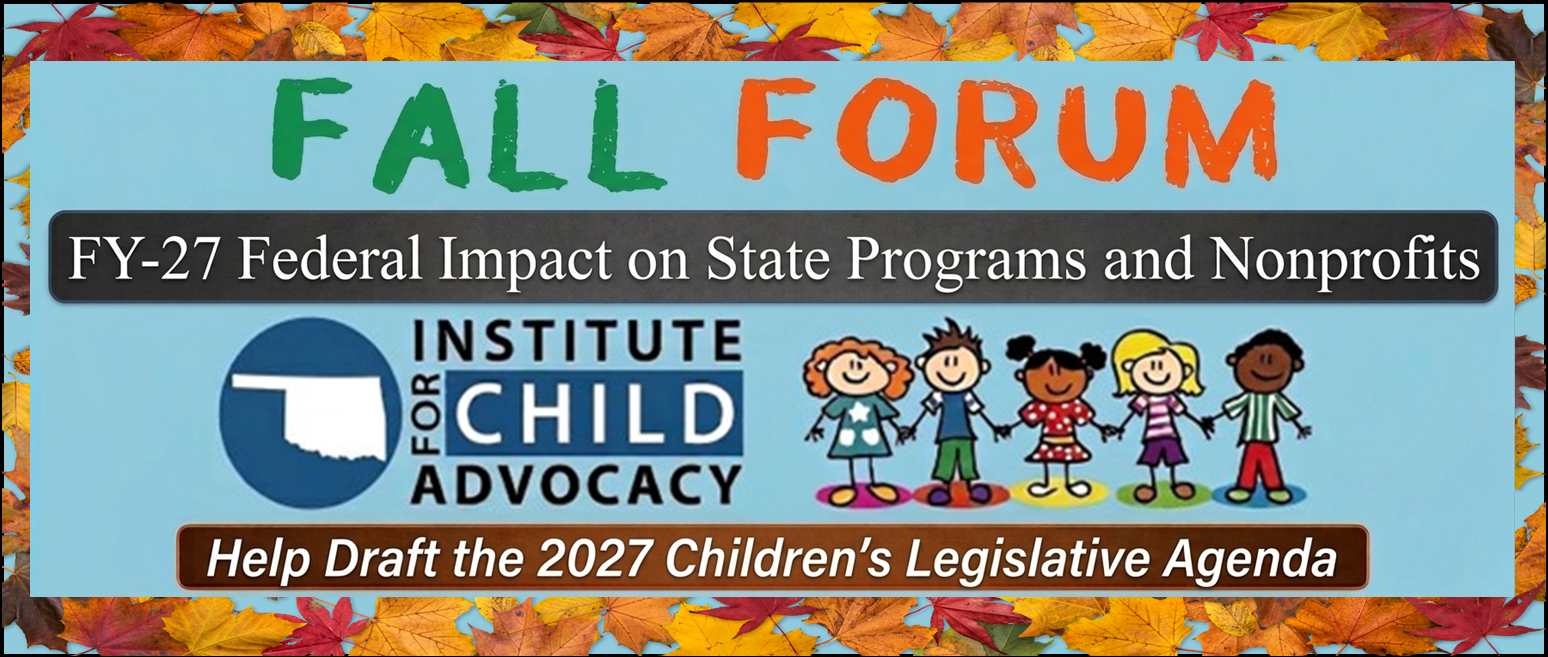
During its annual Fall Forum luncheon slated for Wednesday, Oct. 14, 2026, the Oklahoma Institute for Child Advocacy (OICA) will announce winners of 13 awards recognizing excellence in advocacy, public service, healthcare, education, and philanthropy for children. Nominations from members of the public are now being accepted for these awards, which can be submitted on the organization’s website at https://www.oica.org/awards . The 13 awards are: The Steven A. Novick Child Advocacy Award. The Laura Choate Resilience Award. The Jasmine and Melvin Moran “Kidizenship” Award. The Burnes/Lichtenstein Award for Excellence in Journalism. The H.E. “Gene” Rainbolt Corporate Citizen Award. The Ray & Pat Potts Community Leader Award. The Judy Eason McIntyre Inclusion Award. The Sandy Garrett Educator Award. The Jari Askins Justice for Children Award. The Jon Hansen Public Servant Award. The Dr. Dwight Sublett Healthcare Award. OICA’s Volunteer of the Year Award. The CEO’s Award in Child Advocacy. Steven A. Novick served as the legal counsel for the children who brought forth the “Terry D” lawsuit against the State of Oklahoma. The award is for recognizing an “unsung hero” in the area of child advocacy. Laura Choate has served as a lifelong advocate for Oklahoma children and was the first recipient of the Resilience Award. As a youth, Choate served as a plaintiff in the class-action lawsuit that resulted in dramatic changes to Oklahoma’s juvenile justice system and was used as a model by many other states to establish higher standards. The award is for someone who, like Laura, has overcome difficult circumstances in their youth to become an effective child advocate. The Kidizenship Award is OICA’s statewide award recognizing and rewarding excellence in youth philanthropy by and for Oklahomans under the age of 18. The award is named after Melvin and the late Jasmine Moran, philanthropists, best known as the founders of the Jasmine Moran Children’s Museum in Seminole, Oklahoma. H.E. “Gene” Rainbolt was a prominent figure in the Oklahoma banking industry, having founded BancFirst, the largest state-chartered bank in the state. A strong advocate of improving and diversifying the Oklahoma economy, Mr. Rainbolt worked long and hard to improve health, education, provide better access to capital, and develop Oklahoma’s infrastructure system. This award will recognize a business which has done significant work to help children outside their normal operations. The Burnes/Lichtenstein Award for Excellence in Journalism is named for Karen Burnes and Bill Lichtenstein, two of the reporters who helped uncover the scandal of child abuse under the Oklahoma Department of Human Services in the early 1980s. Their reporting was part of the effort that led to wholesale changes to state’s juvenile justice system and the creation of OICA as an independent watchdog organization outside of state government. The Ray & Pat Potts Community Leader Award was named for the co-founders of The Potts Family Foundation, the late Ray Potts and his wife, Pat, who passed on August 20, 2025. Pat also co-founded the Oklahoma Center for Nonprofits where she served as president and CEO for 20 years. Pat’s focus was always on leveraging resources “to address root causes and build the human potential of the people of our state one child and one organization at a time.” The award will be presented to an Oklahoman in the business world who outside of their profession has done something exceptional to benefit children. A breast cancer survivor who grew up in segregated north Tulsa, Judy Eason McIntyre built a career in social work, served on the Tulsa Public Schools Board, and spent 10 years in the Oklahoma Legislature, serving as a state representative, then a state senator. Through that time, she helped break down race barriers and elevate difficult conversations for the betterment of generations to come. This award will recognize someone who has helped break down racial barriers to benefit youth. The Honorable Sandy Garrett, a lifelong educator, was first elected state Superintendent for Public Instruction in 1990, and again in 1994, 1998, 2002, and 2006. Garrett was the first woman to hold the office of Superintendent and is the only woman to hold a statewide office for five consecutive terms. Through her work, early childhood education was significantly expanded statewide. This award will be presented to an educator who has done something significant for the benefit of Oklahoma’s children. The Jari Askins Justice for Children Award is named for The Honorable Jari Askins, who served with distinction in all three branches of Oklahoma state government and, most recently, as the interim president of Cameron University in Lawton. The Askins Award is awarded to someone in the state’s legal community who has done outstanding work in the courts on behalf of Oklahoma’s children. Jon Hansen began his 26-year career with the Oklahoma City Fire Department in November 1973, eventually becoming an Assistant Fire Chief, where he served as the department’s Public Information Officer during the OKC Bombing. Following this, he became the Executive Director for the Council on Firefighter Training (COFT), working with volunteer fire departments across the state prior to his death. This award recognizes a public servant – law enforcement, fire service, or emergency medical service – who has gone beyond in some way to help a child or children. Dr. Dwight Sublett was the President of the American Academy of Pediatrics - Oklahoma Chapter for several years. During his life, he was an extremely accomplished physician working through the pandemic to protect the health of Oklahomans. He received a multitude of distinguished awards, but the highlight of his career was the children he attended, and the countless lives he touched. This award will go to a member of the healthcare field, individual or organization, who has improved the health of the state’s children through an exceptional act or cause. The OICA Volunteer of the Year Award will go to an individual who has given of their time, talents, and treasures to help ensure that OICA is able to perform the mission set out for it by its founders more than 40 years ago: “Creating awareness, taking action, and supporting policy to improve the health, safety, and well-being of Oklahoma’s children.” The CEO’s Award in Child Advocacy will go to a child advocate whose work does not fit into any category for which specific recognition is given. The award recognizes the tireless efforts of individuals in virtually every profession and area of volunteer service who struggle to make a positive difference in the lives of children. “These awards will allow us to further express our gratitude to those working in different sectors, and who are positively impacting children through their efforts,” said Joe Dorman, chief executive officer of OICA. “We hope this recognition will bring attention to the wonderful advocates who are selected and hopefully provide further encouragement for Oklahomans to do good acts which benefit our children.” Dorman stated that anyone is eligible to nominate a qualifying Oklahoman for any of the awards. “All one has to do is go to our website at oica.org and fill out the nomination form for a suitable nominee,” he said. “Each year, we receive a tremendous group of nominees who embody what is best about Oklahoma. I look forward to seeing the suggestions and presenting those to the OICA awards committee who will determine the recipients.” Nominations will close at 5 p.m. on Friday, Sept. 11. Award winners will be determined by OICA’s Board of Directors and announced at the luncheon on Wednesday, Oct. 14 during OICA’s annual Fall Forum, a conference where advocates and state officials come together to learn how to be a better champion for children. The conference was established to help develop the annual “Children’s Legislative Agenda” to guide OICA’s policy work at the State Capitol. You can find more details relating to the conference at the OICA website.
By Joe Dorman August 24, 2026
PHOTO CUTLINE – Former state Rep. Joe Dorman (left), then a Democrat from Rush Springs and now CEO of the Oklahoma Institute for Child Advocacy, and former U.S. Sen. James Inhofe in a photo dedicated to Dorman by the senator. Inhofe, a Republican representing Oklahoma in the U.S. Senate, called Dorman “a great partner” following their work together on an industrial park project, showing how the two from different political parties worked together to find common ground. (Courtesy Photo)
By Joe Dorman August 17, 2026
Our state is fortunate to have many outstanding individuals who are tireless advocates for children. Often, these silent heroes go unrecognized for helping young Oklahomans have better opportunities and a stronger chance at success in life. Over the past decade with the Oklahoma Institute for Child Advocacy (OICA), I have worked with our Board of Directors to expand the number of awards for those who truly make a difference in the lives of others. On October 14, OICA will convene our first in-person day of our annual Fall Forum, where advocates assemble to improve policies for Oklahoma’s children. On that day, we will hold our annual awards luncheon to celebrate those chosen by our board from public nominations for a slate of awards. To attend Fall Forum and the luncheon, you can go to https://tinyurl.com/OICAFF26 to register and help set the 2027 Children’s Legislative Agenda. Those awards are: • Laura Choate Resilience Award – given to a person who has overcome extreme traumatic experiences to contribute back to the children of our state. • Jari Askins Justice for Children Award – given to a member of the bar or judiciary who has bettered the life of children through their work. • Steven A Novick Child Advocacy Award – given to an unsung hero in child advocacy who is one of those workers “in the trenches” of child advocacy. • Jasmine and Melvin Moran Kidizenship Award – given to a minor (under 18) who has either built a program or bettered one to help their peers. • Burnes/Lichtenstein Award for Excellence in Journalism – given to a journalist who has elevated issues involving children to help advocates create solutions. • Judy Eason McIntyre Inclusion Award – given to someone who has improved race relations and broken barriers. • Dr. Dwight Sublett Healthcare Award – given to a member of the medical community who has promoted health policies for children. • Ray and Pat Potts Community Leader Award – given to someone in an Oklahoma community who has improved the lives of children within their area. • H.E. “Gene” Rainbolt Corporate Citizen Award – given to a business which has elevated support for children beyond the scope of their primary work. • Jon Hansen Public Servant Award – given to a member of Oklahoma’s police, fire or EMS community who has aided a child or children. • Sandy Garrett Educator Award – given to an educator who has gone above and beyond the classroom to help children. You may submit nominations for those you feel are deserving at https://www.oica.org/2026FallNominations. OICA also will recognize Oklahomans with two other awards: our Volunteer of the Year Award and the CEO’s Public Service Award. Those are selected internally by our board and staff for those who have contributed both to assisting OICA and to someone who might fall outside the scope of these other awards. You can see prior award winners at https://www.oica.org/hall-of-award-winners to celebrate those previously recognized or so you do not nominate a prior honoree. I also want to thank those who have recognized OICA and myself recently. None of us with the organization does this work to gain attention, but it certainly is a nice feeling to know others are aware of the effort you put into the mission. Our organization was voted the “Best Nonprofit in Oklahoma City” by readers of the Oklahoma Gazette. We were extremely thrilled to have so many people vote for us in a crowded field of equally deserving organizations. Thank you to the Oklahoma Gazette for holding this annual recognition. You can go to https://www.okgazette.com/ to see the list of the awards and winners. Additionally, I was honored to be included in the 2026 class of “55 Inspiring Oklahomans Over 55.” My deepest thanks to the selection committee for including me. It is truly humbling to be included on this list, especially in my first year of eligibility. You can see them all at https://55over55.com/honorees/ along with information on how to attend the recognition ceremony on September 17 should you want to be a part of the celebration at the State Capitol. 
By Joe Dorman August 11, 2026
As summer ends, lawmakers officially begin analyzing issues of concern and planning policy proposals for 2027. These “interim studies” allow legislative committees to conduct hearings on proposed issues at the State Capitol between sessions. Here are some of those studies we at the Oklahoma Institute for Child Advocacy (OICA) feel are among the most critical. The list includes the study numbers, topics considered, the lawmakers who requested the studies, and committees that will consider them.  Studies being conducted by the House of Representatives include: 26-015 Methods of Dealing with Continued Delays in the Chain of Custody and Testing of Sexual Assault Kits and Storage of Non-Reported Kits - Requestors: Roe, Provenzano. Committee: Public Health. 26-022 Trancy and Chronic Absenteeism - Requestors: Lowe, Johns. Committee: Appropriations and Budget – Education. Combined with Study 26-080. 26-026 An exploration of alternative education in elementary schools vs. long term suspension - Requestor: West, Tammy. Committee: Common Education. 26-030 Health of the Childcare Industry Post Rule Changes - Requestor: Schreiber. Committee: Appropriations and Budget - Human Services. 26-031 State Incentives for Employer Participation in Childcare Costs - Requestor: Schreiber. Committee: Appropriations and Budget - Human Services. 26-033 Domestic Violence in Oklahoma - Requestor: Hefner, Ellyn. Committee: Criminal Judiciary. Combined with Interim Study 26-074. 26-034 Vapes, kratom, THC products, and other substances focusing on youth access, marketing, regulation, health impacts, and policy - Requestors: Pogemiller, Grego. Committee: Alcohol, Tobacco, and Controlled Substances. 26-040 Well-Ordered Schools: Discipline as the Foundation of Classroom Culture, Student Outcomes, and Teacher Retention - Requestor: Hall. Committee: Common Education. 26-053 Home Delivered Meals - Requestor: Gise, Emily. Committee: Appropriations and Budget - Human Services. Combined with Approved Combined with Interim Studies 26-091 & 26-092. 26-074 Domestic Violence Registry - Requestor: Timmons. Committee: Criminal Judiciary. Combined with Interim Study 26- 033. 26-075 Juvenile Statues - Requestor: Lawson. Committee: Appropriations and Budget - Human Services. 26-080 Youth Engagement Opportunities - Requestor: Alonso Sandoval. Committee: Appropriations and Budget – Education. Combined with Interim Study 26-022. 26-082 Child-Sensitive Arrest Policies and Practices in Oklahoma - Requestor: Turner. Committee: Criminal Judiciary. 26-087 Children’s Promise Tax Credit - Requestor: Miller. Committee: Appropriations and Budget - Human Services. 26-091 Government Provided Meals and Best Nutritional Practices - Requestor Roe. Committee: Appropriations and Budget - Human Services. Combined with Interim Studies 26-092 and IS26-053. 26-092 SNAP - Requestor: Pae. Committee: Appropriations and Budget - Human Services Combined with Interim Studies 26-053 and 26-091. 26-093 Dylan's Law II - Requestors: Pae, Gise. Committee: Insurance. 26-120 Artificial Intelligence Accountability in High-Impact State Services: Agency Use, Transparency, Human Review, and Public Trust - Requestor: Clinton. Committee: Government Modernization & Technology. Senate interim studies include: IS 2026-17 Domestic Violence Courts - Requestor: Brooks. Committee: Judiciary. IS 2026-31 Examining Foster Care Reimbursements - Requestor: Dossett. Committee: Health and Human Services. IS 2026-37 Domestic Violence Survivor Services in OK - Requestor: Gillespie. Committee: Judiciary. IS 2026-43 Childcare - Requestor: Hall Committee: Health and Human Services. IS 2026-44 Impact of AI Social Companion Use on Minors - Requestor: Hamilton. Committee: Technology and Telecommunications. IS 2026-51 Supervised Visitation Safety and Accountability - Requestor: Hicks. Committee: Judiciary. IS 2026-66 Intervention Strategies for Combat Domestic Violence and Juvenile Gang Affiliation - Requestor: Mann. Committee: Judiciary. IS 2026-79 Student Behavior & Discipline - Requestor: Pugh. Committee: Education. IS 2026-80 Civics Education - Requestor: Pugh. Committee: Education. IS 2026-89 State Government Funded Meals & the Health of Oklahomans and on Taxpayers - Requestor: Standridge. Committee: Health and Human Services. If you would like to follow any studies, contact the requesting lawmakers to receive meeting notices and learn more about the issue. You may attend these meetings at the Capitol or watch online at okhouse.gov or oksenate.gov. OICA will monitor these and other studies over the next several months. You can receive regular updates from OICA Policy Director Greg Sawyer at OICA.org by subscribing to our weekly newsletter.
By Joe Dorman August 3, 2026
This past week was a time of recovery for all who played a part in the 10th Annual OICA Heroes Ball. More than 400 people attended to celebrate the champions for children honored at the event. The room was filled with people from all backgrounds, retired and active child advocates representing many organizations, past and current elected officials who we are pleased to work with through mutual endeavors, and individuals who all share a drive to help Oklahoma’s children. Our keynote panel was a treat. The NAACP Youth Council, under the tutelage of civil rights icon Clara Luper in the 1950s and 60s, led the way for desegregation in Oklahoma City and started a movement that changed a nation. On August 19, News 9 in Oklahoma City and News on 6 in Tulsa will air a special by Bobbie Miller honoring their efforts on the anniversary of the sit-in. Hosting many of the living participants and the members of their Legacy Committee was an honor for OICA. We also heard from our other award winners, which included Labor Commissioner Leslie Osborn, who will finish her time in office in January; she is a key partner, working with OICA to protect child labor laws in our state. The family of the late U.S. Sen. Fred Harris joined us, allowing us to remember the senator’s many works in both Oklahoma and New Mexico, along with his leadership in Washington, D.C. The family and coworkers of Carmelita Skeeter helped us recognize and celebrate her 50th year with Indian Healthcare Resource Center of Tulsa, a remarkable accomplishment for a true leader in her field. Pivot, an Oklahoma City nonprofit which leads efforts to curb homelessness for young people in the metro area, received our organizational award. We are pleased to continue working with them to elevate policies to help reduce the unhoused population. We also announced the winners of our Anne Roberts People’s Choice Award for individuals and organizations. Anne was our longest serving executive director and a recognized leader nationally in children’s policy work. Trisha Koelsch from Calm Waters was the individual people’s choice award winner and Hearts for Hearing was our organizational selection by the more than 17,000 Oklahomans who voted. In truth, all 13 finalists are exceptional, and we appreciate each of them for allowing us to help elevate their work through this competition. Individuals who donated auction items for our live auction, silent auction, and our game prizes were very generous this year. I had the winning bid on the dinner with Mark Rodgers of the Sports Animal and KOCO Sports; I am looking forward to discussing all things in Oklahoma sports with him and some of my friends at the Goat Sports Bar in Bricktown. We also auctioned off dinner with Inzinga and Spinozi from the Sports Animal at Bush League Sports Tavern, and a lunch with Barry Switzer at Midway Deli and four suite tickets to an OU Football game donated by Dr. Martin Lopez. This is just a small sampling of the graciousness of our donors. We have a listing of all our sponsors who allowed us to brag about them on our website and our social media accounts for the Oklahoma Institute for Child Advocacy. You will also be able to view the video segments prepared by our intern about each of our award winners there. I especially want to thank our staff, board members, youth governors and volunteers who made the event our best yet. Their hard work preparing and breaking down after was appreciated. Thanks also to my former legislative colleague, Don Armes, for serving as our auctioneer and Randy Cassimus for playing music and recording our keynote so others will be able to hear their story online. Team OICA appreciates all who made our event a success! Please mark your calendars for the final Saturday in July 2027 for our next gala. \
By Joe Dorman July 27, 2026
Oklahoma’s 4-H Junior Governor Riley Braden (left) of Creek County and Kid Governor® Katelyn Talley of Valliant Elementary School as Batgirl were among the youth volunteers at OICA’s 10th Annual Heroes Ball, held Saturday, July 25 in Oklahoma City. The pair of young leaders helped guide guests to registration and served as goodwill ambassadors throughout the evening . Courtesy Photo The 2026 National Governors Association (NGA) Summer Meeting is in Oklahoma City this week July 30 – August 1. This bipartisan event highlights the Governor’s Compact on Entrepreneurship. The governors will discuss an array of topics focused on “Reigniting the American Dream.” Opening ceremonies include a town hall on “Common Ground,” moderated by NBC News’ Kristen Welker, led by current NGA Chair and Oklahoma Gov. Kevin Stitt, with NGA Vice Chair and Maryland Gov. Wes Moore, Govs. Jared Polis, Matt Meyer, Josh Stein, Spencer Cox, and Phil Scott, plus Tim Shriver, UNITE CEO and co-creator of The Dignity Index. “Common ground” is a crucial topic not discussed enough in our nation. The United States seems increasingly divided, where I wish leaders would focus on what unites us instead of attacking others with differing opinions. Among those holding the highest elective offices, partisan power stoked by division outweighs consensus solutions. A unifying project of which I am very proud is Oklahoma’s Kid Governor® program, operated by Oklahoma Institute for Child Advocacy (OICA). The Connecticut Democracy Center’s award-winning civic education program provides lesson plans for state affiliates to share with 5th grade teachers who sign up. Teachers receive free lesson plans about the role of elected officials, how elections work, the importance of voting, and civic responsibility no partisan slant or bias. Teachers may also opt into an enhanced curriculum with extra lessons for classroom elections in which students select an issue they feel is important and then campaign on this in the classroom. Classroom winners are considered to have won their Primary Election and then will send a two-minute video to our staff. Then, our board members and the former governors of Oklahoma and their first spouses help select seven finalists. We prepare a ballot listing those seven and send those and their videos to Kid Governor® classrooms to hold a General Election. The candidate with the most votes serves as Oklahoma’s Kid Governor® for the next calendar year; the remaining finalists will serve as Kid Lieutenant Governor and state-level cabinet members. They travel around the state speaking to civic organizations or acting as advisors for youth-serving programs which desire a youth voice. Fifth graders across Connecticut, Nebraska, New Hampshire, Oklahoma, and Vermont elected their 2026 Kid Governors and they were sworn into office in the early part of the year. Here in Oklahoma, Katelyn Talley of Valliant Elementary School in southeastern Oklahoma was elected and she is doing an exemplary job. In Oklahoma, we also partner with our state 4-H program to hold a similar one-day conference to elect a 4-H Junior Governor who also travels and delivers speeches to peers, helping to inspire them to greater heights and to understand young voices matter despite being not old enough to vote. Our 4-H Junior Governor is Riley Braden of Creek County. NBC Nightly News featured three of the 2025 Kid Governors® in a story which you can view here: https://www.youtube.com/watch?v=9NW9seFeG7Y&t=315s Just like the actual governors at the NGA conference, current Kid Governors have their own platform issues such as inclusion for students with disabilities; cancer awareness; the danger of smoking, vaping and drugs; animal abuse; and homelessness. If we could find common ground and consensus for solutions with these five topics, can you imagine what kind of country we might live in? I am thankful that Governor Stitt, chair of the NGA this year, has been supportive of our Kid Governor® program here in Oklahoma. The fact that this program is only in four other states speaks volumes to me on where others should focus their vision. If a governor visiting Oklahoma this week might perchance read this column, you can learn more about signing up your state at https://kidgovernor.org/ and if you are a 5th grade teacher in Oklahoma, you can reach out to Licia Walters at lwalters@oica.org in our office to receive more information for signing up your classroom.
More Posts